
A Renaissance Discipline
The body as a lifelong study — an architecture worth attending to.
The freedom to move, adapt, recover, and keep doing the things that make a life yours. Health is rarely a single symptom, and it is never the same in two people. It is shaped by anatomy, history, habit, and the specific demands of a specific life, which is exactly why it resists a standard protocol. You can't care for it well without understanding it first, and understanding means building it on purpose, before it forces the issue. What is cared for today determines what remains possible tomorrow.

The Renaissance changed what was thought possible. Centuries later, its works still command attention — not simply because of their beauty, but because they reflect a period of extraordinary observation, ingenuity, craftsmanship, and a willingness to challenge what was already known. Their endurance is a reminder that the best work does not last because it remains untouched. It lasts because it was made with enough thought, precision, and purpose to survive contact with time — the same test our body faces, and passes or fails long before anyone notices. Healthcare has spent decades waiting for symptoms instead of watching for them. We're returning to the original instinct: following one person's changes over time, instead of treating every visit like it started from nothing. The Renaissance Health Collective is our name and our method: healthcare approached with the same curiosity and rigor that made the original era feel, for the first time in centuries, genuinely new.
The measure we hold ourselves to is simple: not sessions completed, but capability kept.
The strength to move without hesitation. The independence to stay unassisted. The ability to keep pace with a life that has no plans to slow down. Care is delivered privately, across Miami, by appointment only.

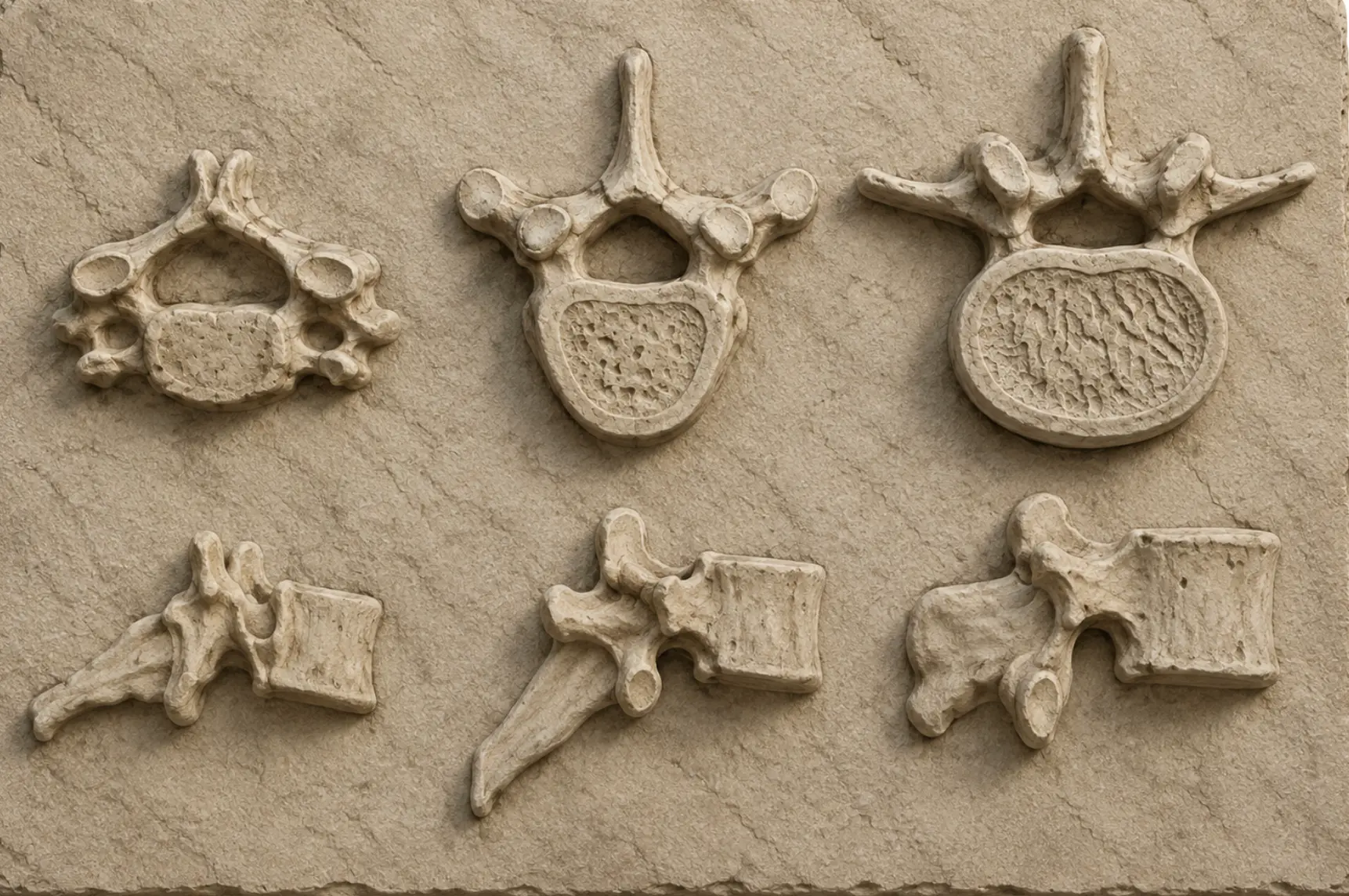
Twenty-four stones, set true.
From our occiput to our femoral heads, through cervical, thoracic, and lumbar, this is the architecture that carries everything else. Every joint beyond it is read in relation to this line, never apart from it.